
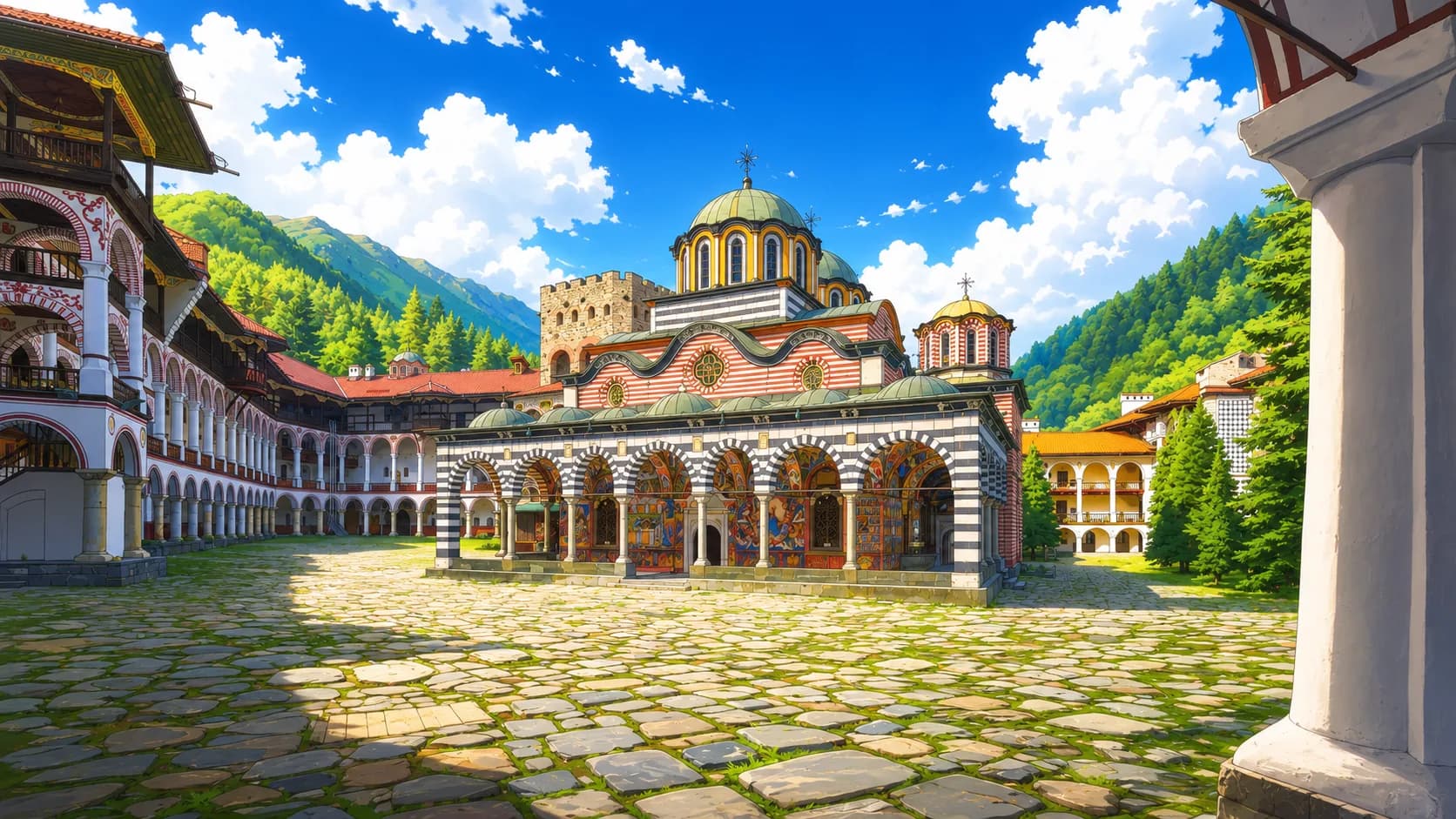
First impressions
Greetings and names
A handshake and direct greeting are common when meeting someone for the first time. Use the polite plural forms until the other person makes the conversation more informal.
Здравейте is the respectful “hello,” while Здравей is informal. Titles and family names are still used in formal situations, although peers and friends often switch to first names quickly.
Name days, celebrations connected with a saint or traditional name, can be as socially important as birthdays. If someone invites you to one, congratulations are always welcome.
Family life across generations
Generations, relatives, and home life
Relatives are often involved in weekend plans, childcare, housing decisions, and holidays. The exact arrangement differs by household, but family members commonly remain part of everyday planning well into adulthood.
- Grandparents and childcareSchool pickups, summer stays, cooking, and practical help can tie three generations into the same weekly routine.
- Personal questionsPeople may ask about marriage, children, work, rent, or salary earlier than you expect. The same question can express curiosity, concern, or both.
- Sunday family visitsA lunch with parents or grandparents can outrank a casual plan, especially when somebody has travelled or cooked for the occasion.
- Disagreement within familiesYounger Bulgarians may push back against family expectations while staying closely involved in family life.
The question everyone asks
Do Bulgarians nod for “no”?
Bulgaria is famous for the claim that nodding means “no” and shaking the head means “yes.” You may see these traditional gestures, but modern habits vary. Many people also change their gestures when speaking with visitors.
Do not build an important decision on a head movement alone. Listen for да (yes) or не (no), and ask if you are unsure.
Drop the clichés
Myths about Bulgaria
Bulgaria is often described from the outside with a strange mixture of Cold War leftovers, bargain-holiday advertising, and Balkan stereotypes. Much of it is lazy.
“Bulgarian is basically Russian.”
Bulgarian is its own South Slavic language. It shares vocabulary and Cyrillic heritage with Russian, but its grammar, sound, history, and identity are distinct.
“Everyone reverses yes and no.”
The traditional head gestures are real, but they are not a universal switch that every Bulgarian performs consistently, especially with foreigners.
“It is only a cheap beach destination.”
The Black Sea resorts are one part of the country. Bulgaria also has major cities, high mountains, monasteries, wine regions, villages, and a long cultural history.
“Post-communist means culturally Russian.”
Decades inside the Soviet sphere affected Bulgaria profoundly, but Bulgarian identity long predates that period. Opinions about communism and Russia vary sharply across generations and families.
Bulgarian self-stereotypes
Common Bulgarian self-stereotypes
These are not facts about every Bulgarian. They are common stories Bulgarians tell about themselves. People use them to explain problems, express pride, or warn a foreigner about a possible misunderstanding.
Connections and favours
Knowing somebody, or knowing somebody who knows somebody, is often treated as more useful than a form, a queue, or an official process. Sometimes that is cynical exaggeration; sometimes it is practical advice.
Relatives abroad
Many families have relatives in Germany, Spain, the UK, the US, or elsewhere. Their experiences contribute to the belief that better opportunities are abroad.
Persistent pessimism
Complaining is often a social language, not a request for rescue. Someone can describe the country as doomed, then spend the afternoon fixing a neighbour’s car, feeding twelve guests, or building a business from scratch.
Frustration with the state
People may expect public offices to be slow, inconsistent, or more interested in paperwork than solutions. This distrust can surprise visitors who expect the written rules to explain how a system works.
Village food as the benchmark
Tomatoes from a relative’s garden, homemade lyutenitsa, village eggs, and fruit brought from “home” are often preferred to supermarket versions. Family memory influences these comparisons.
Rule-bending and complaints
A person may jump a queue, park on the pavement, or find a shortcut, then criticise others for doing the same. The joke is common because people recognise the contradiction.
Poverty and government
A common view is that Bulgaria has beautiful land, clever people, good food, and enough talent to succeed. People who hold this view blame corruption, politicians, and “the system” for the country’s problems.
Folk cures and older relatives
In many families, a grandmother’s advice can matter more than a doctor’s leaflet. Common advice includes drinking something hot, avoiding a draught, wearing another layer, and not going outside with wet hair.
Foreign enthusiasm for Bulgaria
Bulgarians may welcome praise from abroad but dislike clichés about cheap holidays, friendly peasants, Soviet nostalgia, or “hidden gems.” Praise can still feel narrow if it reduces the country to a tourist image.
When someone says “That is Bulgaria,” the words may express pride, frustration, affection, acceptance, or dark humour. The sentence is rarely neutral.
Characters in jokes and criticism
Common Bulgarian characters in jokes and criticism
Bulgarians use recurring characters to talk about themselves: in jokes, novels, family arguments, television, and political criticism. They are shorthand for behaviour people recognise, not a personality test or a full explanation of anyone.
Бай Ганьо, the embarrassing opportunist
This literary character became a well-known national archetype, or model for a recurring type of person. He is loud, rude, boastful, and quick to use any chance for his own benefit. One example of Bai Ganyo behaviour is pushing to the front of a queue, then acting offended when someone objects. Calling someone “Bai Ganyo” is a serious insult about their manners and civic behaviour in shared public life.
Тарикатът, the clever rule-bender
The tarikat gets around the queue, knows a shortcut, finds a connection, and never pays more than necessary. A petty example is putting a jacket on a café chair to “save” a table, then claiming it was taken when someone asks. Sometimes the trick is played for a laugh; at other times, it is simply selfish behaviour that ignores ordinary rules.
The grandmother who knows the cure
She feeds you, warns you about the draught, diagnoses your tiredness, comments on your jacket, and treats ordinary choices as family business. It can come from care, but it can also become nosiness, overprotection, excessive worry, and a tendency to exaggerate dangers.
The universal expert
He can explain politics, football, car repairs, world affairs, and the correct way to grill meat without checking anything. If a fact proves him wrong, he changes the subject, blames the source, or claims he knew it already.
The practical fatalist
“Nothing will work” may be followed by a homemade repair, help for a neighbour, or a twelve-hour drive to solve a family problem. The person expects failure but still finds a practical way forward.
Връзкаря, the person with a connection for everything
Someone knows a mechanic, doctor, civil servant, landlord, cousin abroad, or cousin of a cousin. Personal access can solve real problems. It also shows that many people do not expect official systems, queues, or price lists to be enough. Ицо Хазарта and Homelesz use the same idea in Имам човек.
The Bulgarian abroad
They left for Germany, Spain, the UK, the US, or elsewhere and now have a different relationship with Bulgaria. Relatives may admire or envy them, joke that they have changed, or ask for help with life abroad. Some return for dental care, doctors, or paperwork because it is cheaper or easier to arrange through family.
The city-village caricature
The “Sofia person” is imagined as hurried, expensive, self-important, and distant. The “village person” is seen as practical, suspicious of city life, nosy, stubborn, or tied to older habits. Real people quickly show the limits of both stereotypes.
Чалгарка, the pop-folk devotee
The chalgarka is linked with pop-folk music, heavy make-up, glamour, and dramatic public behaviour. The word may describe someone who treats every night out like a music video. It is also used to insult women because of their clothes, music, or sexuality.
Чалгар, the pop-folk showman
The chalgar is imagined as loud and highly aware of his image. Typical signs include a flashy car, expensive-looking clothes, a crowded table, and music turned up too high. The stereotype also criticises people who show off their spending.
Мутра, the hard-man enforcer
The mutra is the post-transition image of a bulky, intimidating man connected to security work, organised crime, or the business world around it. He uses size, expensive clothes, a large car, and implied connections to make people give way, even when no explicit threat is made.
The wannabe мутра
The wannabe mutra copies the look without having the money or power. He wears fake designer clothes, rents cars, keeps dark glasses on indoors, and tells stories about important people he claims to know. The character is comic because the scary image does not match the reality.
Complaining as social contact
Every conversation becomes a report about what is broken, expensive, unfair, or badly organised. The complaint may be real, but it can also be a normal way to show interest or keep a conversation going. Nobody may expect a solution.
Recognize the reference when someone makes the joke, but do not assign the role to a stranger. “Bai Ganyo,” “tarikat,” “baba,” and “the uncle who knows everything” are social shorthand, not neutral descriptions of Bulgarian people.
National pride and criticism
Sources of pride and shame
The following themes often appear in family arguments, public debate, school history, football stands, election nights, and conversations among Bulgarians abroad.
Common sources of pride
A long national history
People often connect the medieval Bulgarian empires, centuries of Ottoman rule, and the modern Bulgarian state into one long national history.
Cyrillic and literary culture
The development of Cyrillic in the medieval Bulgarian literary world, the spread of Old Bulgarian literature, and 24 May celebrations are central cultural achievements.
Levski, Botev, and the National Revival
Revolutionaries, teachers, priests and other clergy, writers, and community leaders are remembered for developing the idea of a free Bulgaria before the state returned.
Living folklore
Uneven rhythms, choral singing, horo, regional costume, crafts, and rituals remain part of festivals, family celebrations, and cultural education.
Land, food, and resilience
People often express national pride through Bulgaria’s mountains and Black Sea coast, rose oil, yoghurt traditions, wine, village produce, sporting achievements, and success abroad.
Common sources of shame or anger
Corruption and the culture of connections
Public anger often focuses on political corruption, rules that are not applied equally, public bodies controlled by private interests, and the need for personal connections.
Тарикатлък
People often criticise the admiration given to someone who jumps the queue, evades responsibility, or profits while others follow the rules.
How minorities are treated
Racism against Roma people, hostility towards migrants, and prejudice against LGBTQ+ people are real problems. Many Bulgarians oppose these views, while others repeat them.
Depopulation and abandoned places
People grieve for closed schools and villages losing their last residents. Public debate often links these losses to emigration, low birth rates, and regional inequality.
Neglect of shared space
People often criticise litter, illegal building, damaged historic sites, dangerous pavements, and careless driving. Another common complaint is that homes are clean while shared areas are neglected.
Common national boasts
Claims often made to foreigners
Conversations about national pride often include achievements, discoveries, victories, and cultural markers. Some claims are accurate and others are exaggerated. Repeating them without context can sound forced or inappropriate.
Lactobacillus bulgaricus and yoghurt
Bulgarian student Stamen Grigorov identified Lactobacillus bulgaricus. The discovery is frequently mentioned when Bulgarians discuss кисело мляко as part of the country’s heritage.
The flag colours in Shopska salad
The tomato, cucumber, and white cheese are said to represent the red, green, and white of the Bulgarian flag. The association is widely repeated, although Shopska salad was developed for state tourism in the twentieth century.
Rose-oil production
The Rose Valley around Kazanlak is a major producer of rose oil. People often discuss its quality, price, whether it is genuine, and its role in Bulgarian exports.
The 1994 World Cup
Bulgaria finished fourth at the 1994 World Cup, after Emil Kostadinov’s qualifying goal against France and a tournament led by Hristo Stoichkov. The result remains a frequent reference in football conversations.
Cyrillic beyond Bulgaria
Bulgaria’s medieval literary schools helped develop and spread Cyrillic across the Slavic world. That history is a common source of national pride.
Claims about Bulgaria’s age
The claim that Bulgaria is Europe’s oldest country and has never changed its name is an oversimplified slogan. A more exact claim is that the First Bulgarian Empire was formed in 681 and the name Bulgaria has remained in use.
Beauty stereotypes
Claims that Bulgarian women are uniquely beautiful use women as proof of national status. They can treat women like objects, especially when said to foreign women or in mixed company.
John Atanasoff and early computing
John Atanasoff, whose father was Bulgarian, co-developed the Atanasoff-Berry Computer. Saying that “a Bulgarian invented the computer” omits Clifford Berry and the work of other early computing pioneers.
The Varna Gold
The Varna Necropolis, an ancient burial site, contains the oldest known large collection of worked gold. The graves are several thousand years older than the Bulgarian state. The find therefore belongs to the ancient history of the land, not to the modern nation.
Pride in Bulgaria’s landscapes
Bulgarians often praise the country’s mountains, beaches, lakes, and villages to foreign visitors. Claims that the scenery is unmatched or undiscovered can sound like tourism advertising.
Tomatoes and national taste
Garden and market tomatoes are often compared favourably with supermarket produce. Claims that every Bulgarian tomato is better ignore differences in variety, season, and growing conditions.
Homemade rakia
Homemade rakia is often presented as stronger and more authentic than commercial spirits. It is part of many family and village traditions, but alcohol tolerance is not a useful test of character or belonging.
The Battle of Doiran
The Bulgarian army’s victories at Doiran in the First World War are often used as proof that a smaller force stopped larger British and Greek attacks. Some accounts leave out the wider collapse of the Macedonian front and Bulgaria’s exhaustion.
Visiting a Bulgarian home
Hosting and hospitality
A home invitation often comes with abundant food and a host who wants you to try everything. Accepting at least a little is a warm response; you can still decline more with a friendly Благодаря, беше много вкусно, “Thank you, it was very delicious.”
- A small gift for the hostFlowers, sweets, wine, or another modest gift for the host is a thoughtful gesture.
- Shoes and household customsIf shoes are left near the entrance, take yours off or ask what the host prefers.
- Additional servingsHosts may offer several servings.
Time at the table
Coffee, cafés, and long conversations
A quick coffee can stretch into an afternoon. Cafés serve as meeting rooms, date venues, workspaces, gossip exchanges, and comfortable places to sit without building the day around a full meal.
Order the style you want
Espresso is common, as are longer coffees, cappuccino, and Turkish-style coffee. Ask for milk or sugar instead of assuming they will arrive.
Ordering water separately
A small glass is common in some cafés and absent in others. Bottled water usually appears on the bill.
Ask when you are ready
Staff may leave you alone once the drinks arrive. Say Сметката, моля when you want the bill.
Independent cafés are especially common in Sofia (video tour), Plovdiv (video tour), and larger university cities. The habit of meeting for coffee is common across the country.
Reading the room
Everyday etiquette
Direct communication
A concise answer or serious expression does not necessarily signal annoyance.
Respect sacred spaces
Dress and speak considerately in churches and monasteries; follow posted photography rules.
Punctuality by context
Arrive on time for professional appointments. Timing for relaxed social gatherings may be more flexible.
Learn a few Bulgarian words, observe what people around you do, and ask when a custom or expectation is unclear.