
Practical realities
What might shock you
Conditions vary sharply between neighbourhoods and services. Renovated centres and reliable private businesses can sit beside broken pavements, neglected buildings, visible inequality, and confusing public systems.
- Customer service
Counters, shops, ticket offices, and clinics may give short answers with little explanation. Ask the next practical question and keep the errand moving.
- Driving conditions
Fast driving, impatient overtaking, uneven roads, and cars moving into pedestrian areas can be worrying. Never assume a driver has seen you just because you have priority.
- Smoking in public
You may encounter more smoke around terraces, entrances, nightlife, and social gatherings than you expect. Ask whether a smoke-free table is available.
Shopping basics
Markets, shopping, and bargaining
Markets are practical places for produce, cheese, flowers, household goods, clothing, and gossip. They can also be the easiest place for a visitor to misunderstand quantity, quality, or price.
- Confirm the price and quantityProduce may be priced by kilogram, piece, bunch, or tray. Pointing and asking Колко струва?, “How much does it cost?”, prevents surprises.
- When bargaining is expectedBargaining may be accepted at flea markets, antique stalls, and private sales. It is not normal in a bakery, supermarket, or produce stall. Do not pressure a seller over the price.
- Paying with cashSmall stalls may not take cards. Carry small notes and coins, but do not display a large wallet in a crowded market.
- Products labelled “homemade”Village cheese, honey, rakia, and preserves can be wonderful. Ask who made it, where it came from, and whether it needs refrigeration.
- Evaluating regional goodsRose products, pottery, embroidery, icons, and carved objects vary widely in quality and origin. A souvenir shop is not automatically a workshop.
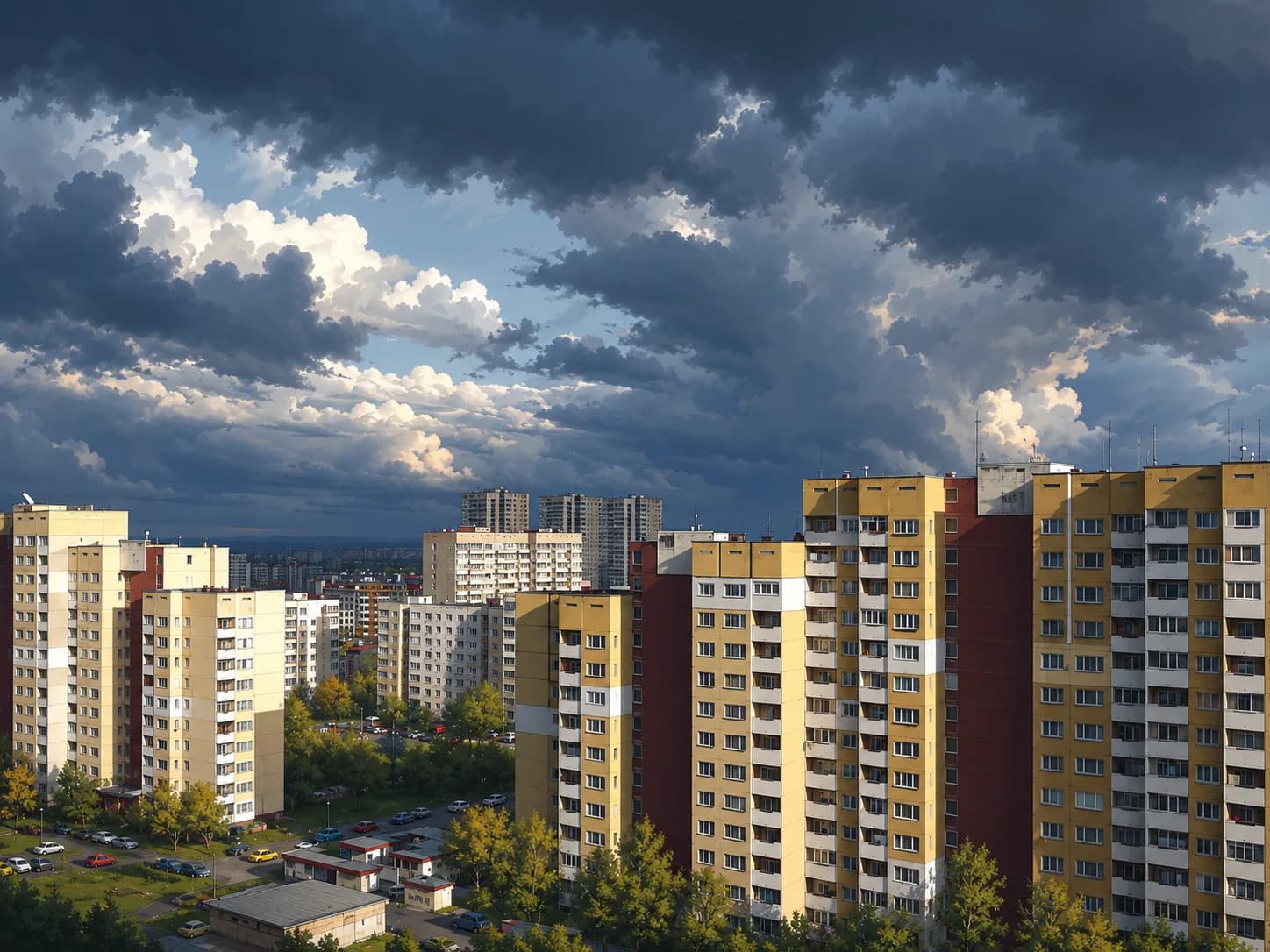
Shared life in an apartment block
Life in a Bulgarian apartment block
When viewing a flat, inspect the entrance, lift, pipes, parking, basement, shared repairs, and building management. These affect daily life and often involve shared costs or rules.
Building management
Residents may share repair costs, organise cleaning and security, and keep track of unpaid lift fees. Check the entrance noticeboard for fees, repairs, and meeting notices.
Noise between flats
Sound passes easily between some flats and stairwells. Pets, renovations, and balcony use can therefore affect neighbours. Quiet hours and building customs vary, so ask before assuming everyone uses the same schedule.
Parking disputes
Cars on pavements, unofficial spaces, bollards, and claims over “that spot” often cause arguments. Never assume an empty space is free to use.
How balconies are used
Residents use balconies for plants, laundry, jars, bicycles, air-conditioning units, smoking breaks, and storing summer produce.
Rules for shared spaces
Ask the host or landlord about entrance cleaning, lift fees, intercoms, bins, and repair notices. Many of these rules apply to the whole building.
Uneven renovation
Post-socialist blocks, new construction, insulation projects, and individual repairs create visibly uneven buildings. Inspect the common areas and utilities separately from the flat.
Transport basics
Public transport and moving around
Urban public transport is inexpensive in many cities, but ticket rules vary. Sofia’s metro, rural buses, and summer resort shuttles use different schedules and payment systems.
- Tickets and activationRules differ between cities and transport operators. Keep a ticket or digital proof until the journey ends, and do not assume a contactless bank card works everywhere.
- Intercity bus proceduresSchedules, platforms, luggage rules, and destination names can be confusing. The Bulgarian spelling of a city is worth saving on your phone.
- Priority seatingOlder passengers, people carrying children, and passengers with limited mobility may expect practical courtesy even when nobody announces it.
- Travel times outside major citiesA short route can take most of the day when there are road works, bad weather, seasonal traffic, or infrequent services.
Avoiding unclear prices
Tourist traps and money pressure
Most visits are uneventful. The common problems cluster around places where visitors are tired, rushed, drinking, or unsure what a normal price looks like.
- 01
Airport and station taxis
Use the official rank, a known company, or a transfer booked in advance. Check the company name, meter, and price list before the car moves. Leave if the driver demands an unclear flat fee.
- 02
Clubs and “gentlemen’s clubs” with unclear prices
Ask for the price of drinks, entry, table service, and extras before ordering. Leave if staff become threatening or will not explain the bill.
- 03
Resort menus and beach prices
Check whether the price is per portion, per 100 grams, or per item. High resort prices are not necessarily fraud. The warning sign is a price that was not shown clearly before you ordered.
- 04
Street offers for “authentic” experiences
Be cautious with unofficial guides, surprise ticket sellers, fake charity requests, and anyone insisting that a closed attraction has a private entrance.
- 05
Money and card habits
Count change, keep your card in sight, use ATMs attached to banks when possible, and avoid exchanging money with a stranger who promises a special rate.
- 06
Receipts and details
For taxis, repairs, rentals, tours, and deposits, keep the company name, plate number, receipt, messages, or booking reference until the problem is solved.
If a stranger pressures you to act quickly or keep a payment secret, stop. Verify the price, keep a record, and choose another option.
Everyday care
Personal safety
Visitors can move around Bulgaria with normal care. Keep your phone charged and check the route home before going out. Be more careful in places you do not know or where the lighting is poor, especially after drinking.
- 01
Pickpockets and distraction theft
Keep phones, wallets, and documents secure on busy public transport, at major stations, and in crowded resort areas. Do not leave valuables unattended on a beach or visible in a car.
- 02
Getting home after nightlife
Late public transport is limited in many places. Use a trusted taxi or taxi app and keep your phone charged. Do not accept a ride you did not ask for from a stranger outside a club.
- 03
Roads and crossings
Road surfaces, lighting, driving standards, and signs around road works can vary. Be especially careful at night, outside major cities, and when crossing even where you have priority.
- 04
Mountains and the sea
Weather, water, cliffs, caves, chairlifts, and high trails can change quickly. Carry appropriate equipment, check conditions, tell someone your route, and make sure insurance covers the activity you plan.
Documents, counters, repairs
Public errands
Public errands can involve scattered queues, printed forms, missing details, and a second trip. Treat receipts and written confirmations as part of the task.
Extra documents and copies
ID, copies, reference numbers, screenshots, and a Bulgarian address can save a return visit. Ask which document is missing before leaving the counter.
Written records
For work, rent, repairs, fees, or administration, a friendly verbal promise cannot substitute for a document and receipt.
Queues without a clear line
Ask Кой е последен?, “Who is last?”, in a waiting room where people seem scattered rather than lined up.
Stay practical: note names, times, case numbers, prices, and promised dates. A calm paper trail is more useful than a long argument.